 Nia Schlegel
In my sheer endless audacity, when our old TV (or rather, digital signage display — a SWEDX) broke, I got the brain worms. We could upgrade the picture quality (the difference is really noticeable) and save money by grabbing a TV from Kleinanzeigen that was broken in a convenient way. Convenient meaning one of the PCBs needs replacing, not the panel. That’s what we’re after, after all.
Opening It Up
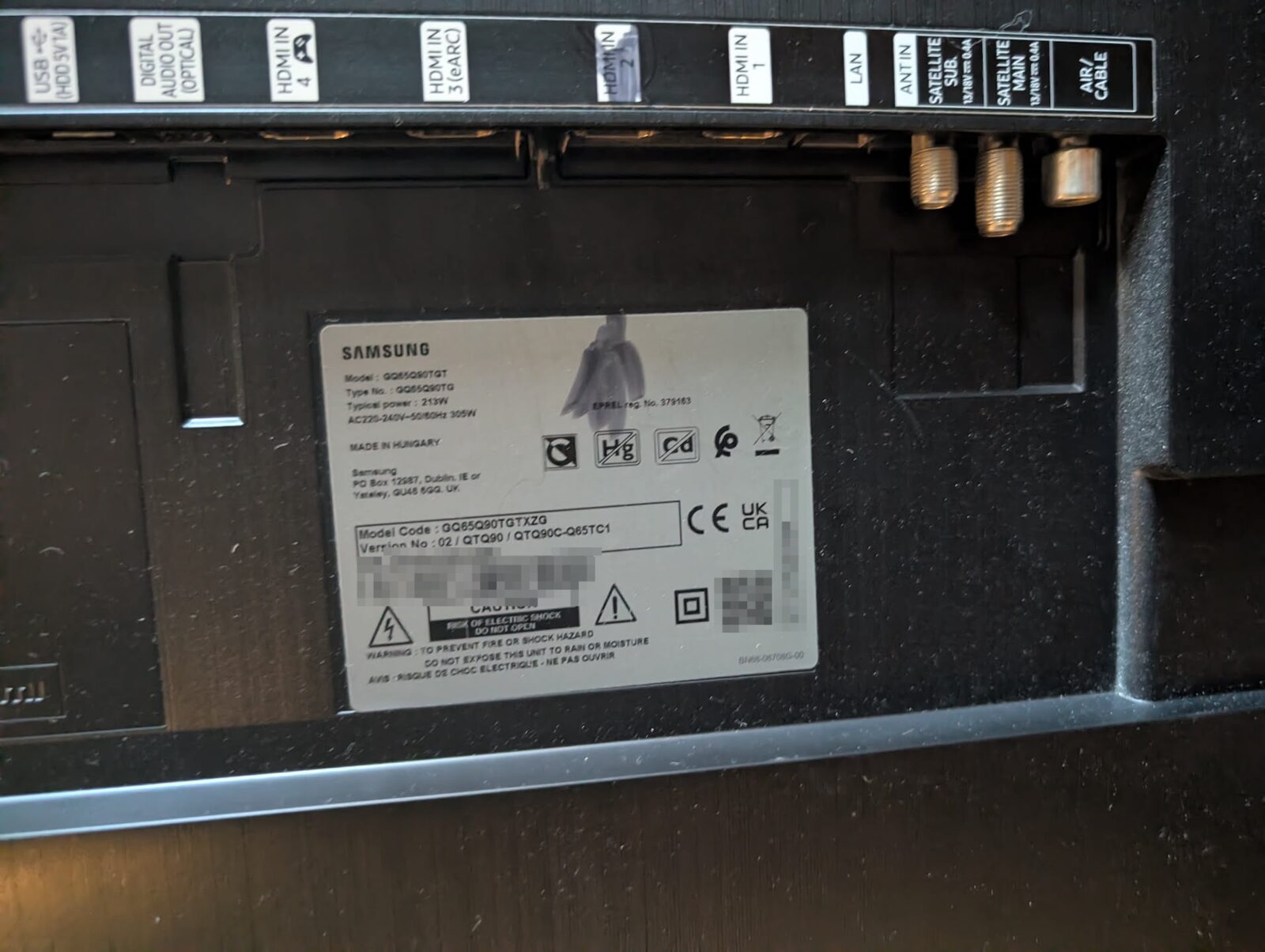
After we got it (a 65” 4K Samsung QLED, the 2020 Q90T, for €60) and brought it home, my first instinct was to open up the back (cracked it a little — oops) and look for anything obvious on the power supply: blown caps, a blown fuse, etc. Loosening all the clips that hold the plastic back onto the stamped sheet metal frame of the TV was pretty fiddly and required more force than I was really comfortable exerting on a very sensitive piece of optoelectronics. I guess I just had to be uncomfortable then.
Diagnosis
After not finding anything obvious on the power supply board, I wanted to check the voltages with it plugged in. To my surprise, it turned on just fine, even though it had stayed dark when we briefly powered it before. Ecstatic, we put it back together and set it up.
We weren’t living in our apartment at the time (the roof insulation was being redone), so we didn’t daily-drive it. When I got around to testing it more about two weeks later, it worked flawlessly for the first five minutes. Then the HDMI picture and sound started showing textbook digital glitches, while the TV’s own on-screen menus stayed clean. After about three seconds of that, it shut itself off and wouldn’t turn back on until I unplugged it and let the caps discharge for a few minutes.
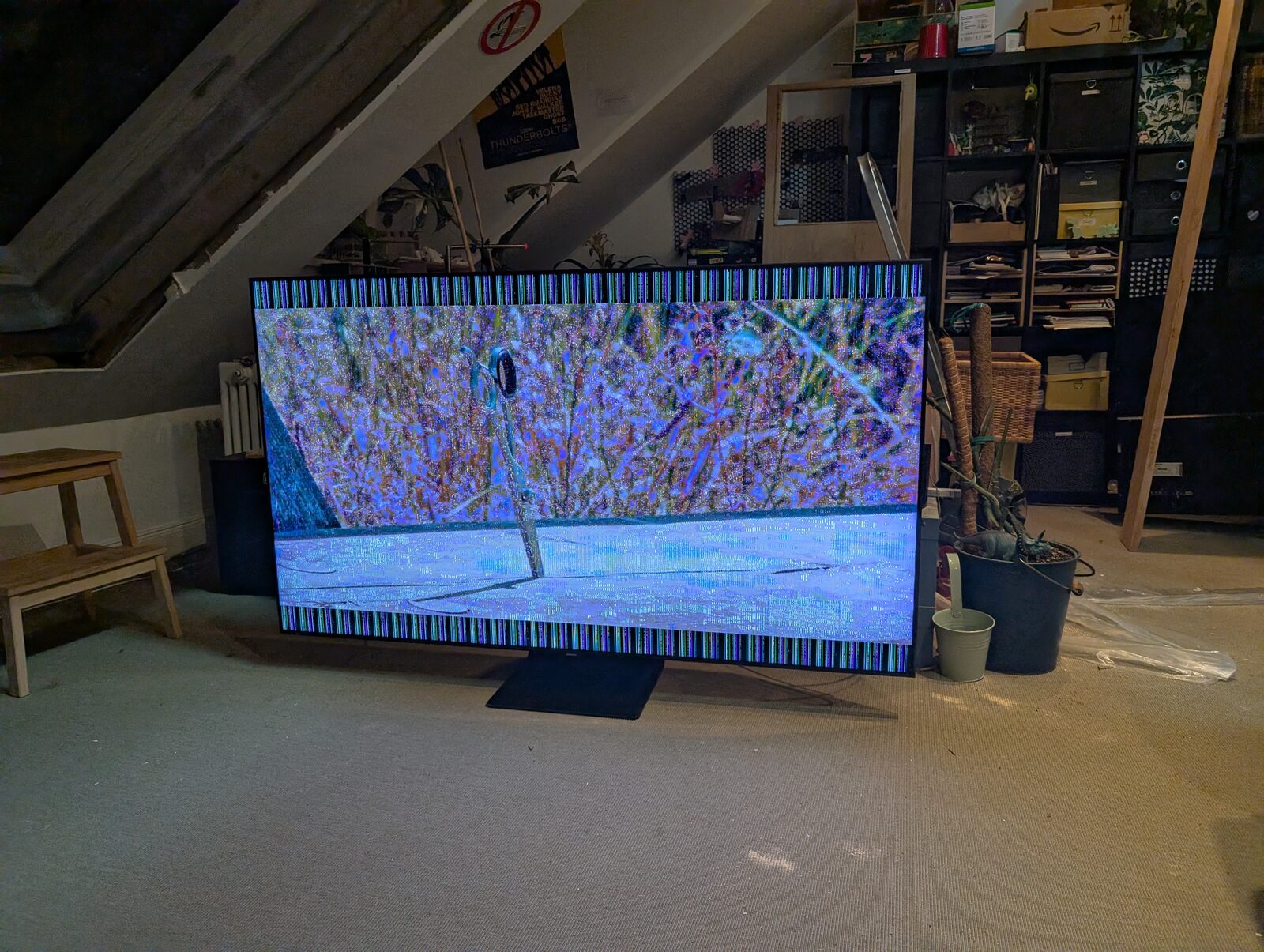
The window of it working shrank with each power cycle. A bit of research led me to believe this had something to do with thermal expansion and a bad connection (a cracked solder joint or similar — it had been moved around quite a bit, after all). When I described the problem on Reddit, everyone basically agreed it was the mainboard.
Sourcing & Swap
Getting the correct mainboard was harder than I anticipated. No one in Germany really wanted to sell one for under €200, so I ordered it from TVelectron in Spain and waited a week.
If you have the same TV (model code GQ65Q90TGTXZG), the board you want is BN94-15253K. Search for that number, not the BN41-02749A printed on the PCB itself: the BN41 number is just the bare board, while the BN94 number is the complete assembly with the firmware for your model.
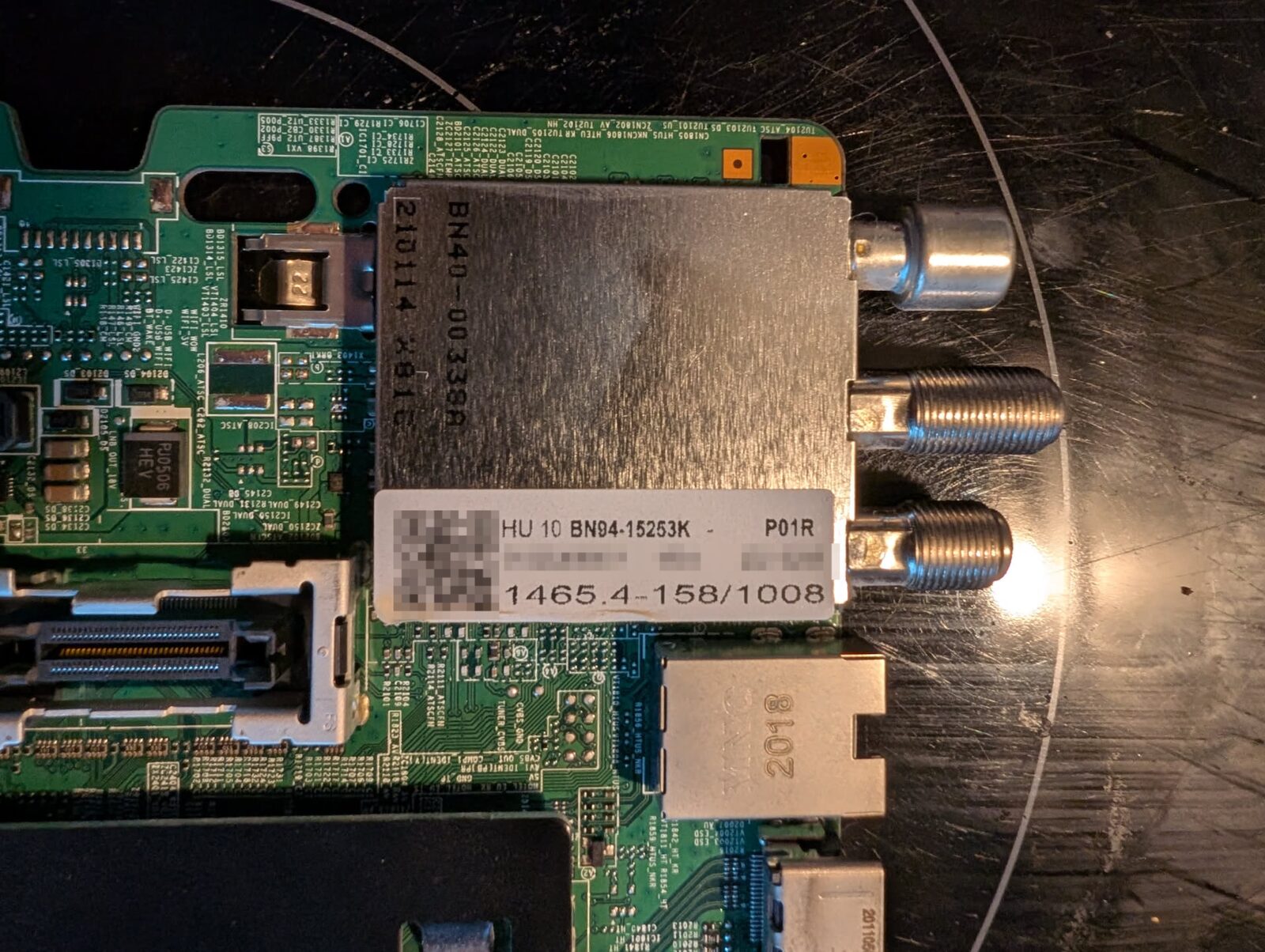
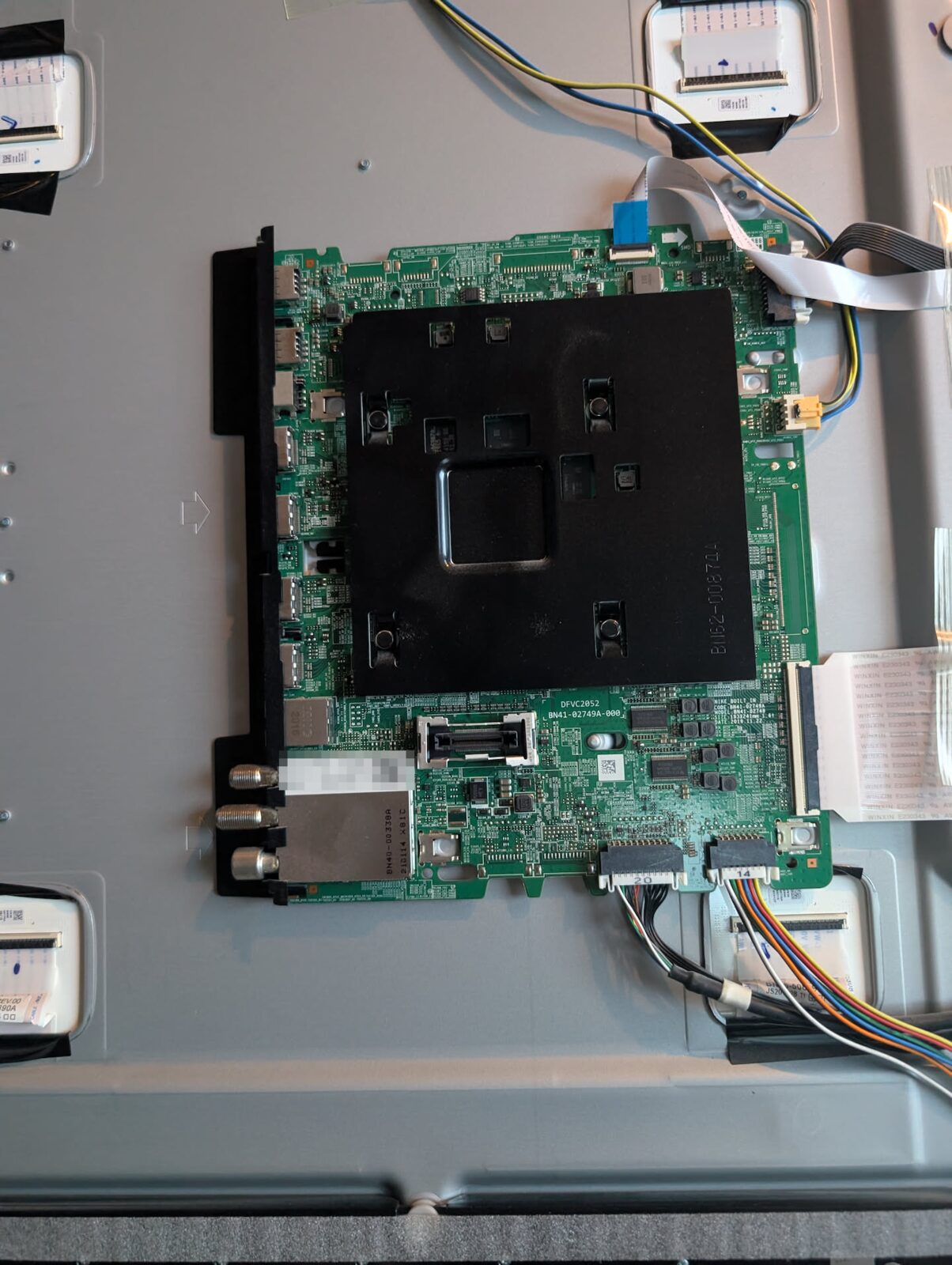
Changing it out was pretty trivial: you just bend the board over a metal stop, slide it out, and do the same in reverse to put the new one in.
The connectors are all pretty obvious and hard to get wrong.
Result
It worked immediately after the swap: no glitches, no shutdowns, no service menu or firmware fiddling needed. We now have a working TV for a total of about €200. New, this exact TV launched in Germany at €2,699 in 2020.
| Item | Cost |
|---|---|
| Broken TV | €60 |
| Mainboard + shipping | €120 |
| Gas | €20 |
Hope this helps someone with the same TV :)